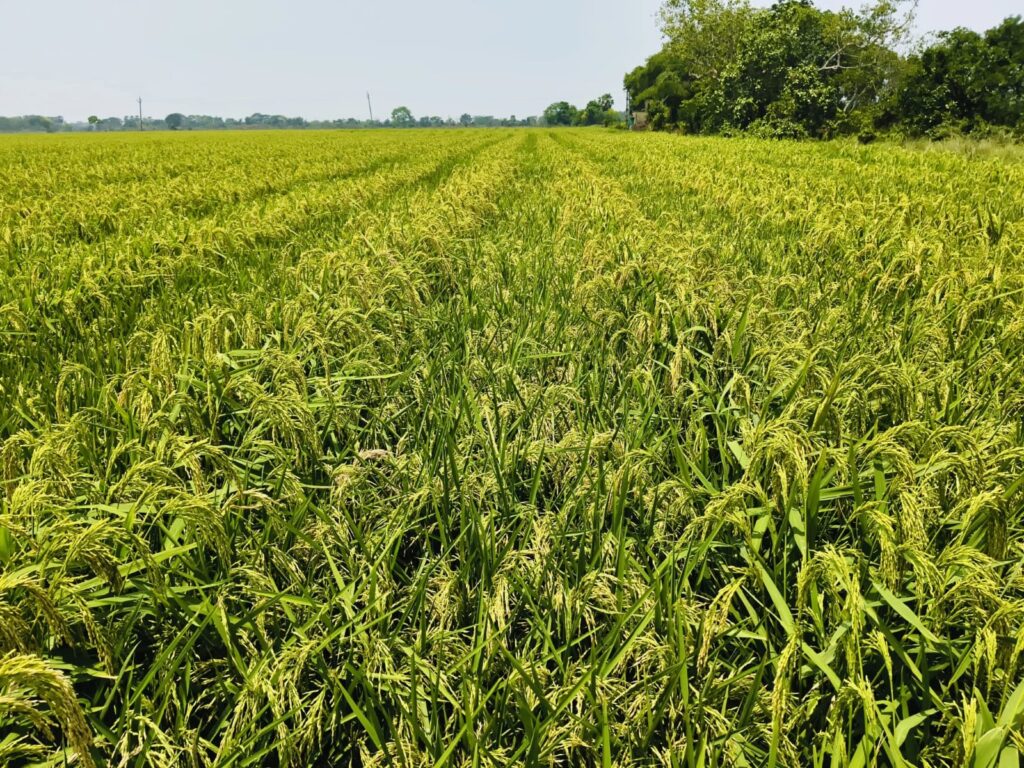
💬 Hybrid Rice Seed Production Tips for Higher Yield
Introduction
Complete Hybrid rice seed production guide is very important for farmers who want higher yield and better seed quality. Many farmers face problems due to poor synchronization, wrong row ratio and lack of practical field knowledge.
In this hybrid rice farming guide, I am sharing practical field insights and proven rice seed production tips to improve seed setting and yield.
What is Hybrid Rice Seed Production?
Hybrid rice seed production is the process of crossing a male sterile line (A line) with a restorer line (R line) to produce high-yielding hybrid seeds.
This process requires proper planning, isolation, synchronization, and field management.
Key Factors for Successful Hybrid Rice Seed Production
Hybrid rice seed production success depends on several important field factors:
- Good CMS (A line) with proper stigma exertion
- Strong R-line pollen availability
- Proper synchronization (nicking) between A & R lines
- Timely GA3 application
- Suitable weather conditions (temperature & humidity)
Step-by-Step Hybrid Rice Seed Production Process
1. Site Selection & Isolation
Select fertile land with good irrigation and drainage.
Maintain:
- 50 meters isolation distance
- 21 days time isolation
This prevents contamination & maintains seed purity.
2. Land Preparation
- Prepare field with proper ploughing
- Level the land for uniform water distribution
- Apply FYM (organic manure) before transplanting
3. Row Ratio (A:R)
Maintain correct row ratio for effective pollination:
👉 Recommended ratio: 7:2 (A line : R line)
This ensures proper pollen transfer and seed setting.
4. Synchronization (Nicking)
Flowering of A & R lines should occur at the same time.
Methods:
- Adjust sowing time
- Manage nursery timing
Poor synchronization leads to low seed yield.
Understand yield loss in hybrid rice seed production in detail
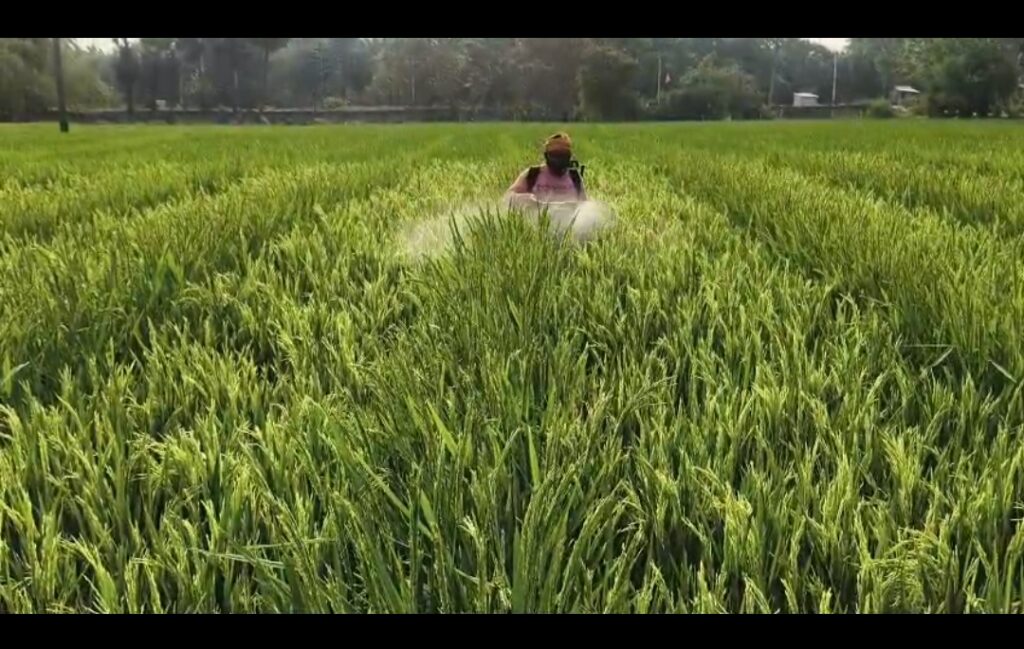
5. GA3 Application
GA3 (Gibberellic Acid) improves panicle exertion.
👉 Dose: 60–70 gm/acre (in 2–3 splits)
Spray at:
- 5–10% heading
- 15–20% heading
- 30–35% heading
Proper GA3 application in rice improves panicle exertion & seed setting.
6. Pollination Techniques
Supplementary pollination improves yield:
- Rope pulling
- Bamboo stick shaking
👉 Best time: Morning hours (10 AM – 1:30 PM)
7. Roguing
Remove off-type plants at different stages:
- Vegetative stage
- Pre-Flowering and Flowering stage
- Maturity stage
This maintains genetic purity of seeds.
Common Problems in Hybrid Rice Seed Production
Farmers commonly face these issues:
- Poor synchronization
- Incorrect row ratio
- Low pollen availability
- Improper GA3 timing
- Pest and disease attack
These problems reduce seed setting and overall yield.
Practical Solutions to Improve Yield
Follow these steps to increase seed production:
- Maintain proper row ratio
- Ensure correct GA3 timing
- Monitor field regularly
- Use supplementary pollination
- Maintain proper nutrient management
👉These practices can increase yield by 20–30%.
👉Frequently Asked Questions (FAQ)
Q1. Hybrid rice seed production में सबसे important क्या है?
👉 Synchronization (nicking) सबसे important factor है।
Q2. GA3 कब use करना चाहिए?
👉 Heading stage (5–35%) के दौरान 2–3 बार spray करें।
Q3. Best row ratio क्या होता है?
👉 7:2 या 8:2 सबसे effective माना जाता है।
Conclusion
Hybrid rice seed production requires proper planning, field management, and technical knowledge.
By maintaining synchronization, correct row ratio, GA3 application, and proper pollination techniques, farmers can achieve higher yield and better seed quality.
By following this hybrid rice farming guide, farmers can improve rice yield and seed quality.
👉Related guides:
- Yield loss in hybrid seed production (link)
- Nicking problem in hybrid seed (link)
- Visit Anand Farmer homepage (link)
👉 For more practical farming insights, visit Anand Farmer homepage regularly.
Comments
4 responses to “Hybrid Rice Seed Production Guide (2026): Step-by-Step Method for Higher Yield”
Dear Sir,
The above information is crucial for hybrid seed production of paddy. I’d like to add that during area planning, selecting experienced farmers can play a major role in implementing good practices on time. Paddy has a very short flowering duration, so timely GA3 application at the perfect stage is critical 😊.
Thank you for your valuable insights. Absolutely agree—timely GA3 application & experienced farmer selection play a critical role in achieving better results. Appreciate you sharing this.
“All steps involved in hybrid (HY) seed production in paddy were critically noted.”
Thank you! Glad you found it useful. Your feedback motivates us to share more practical insights.